How to Pack Fragile Items So They Arrive Intact
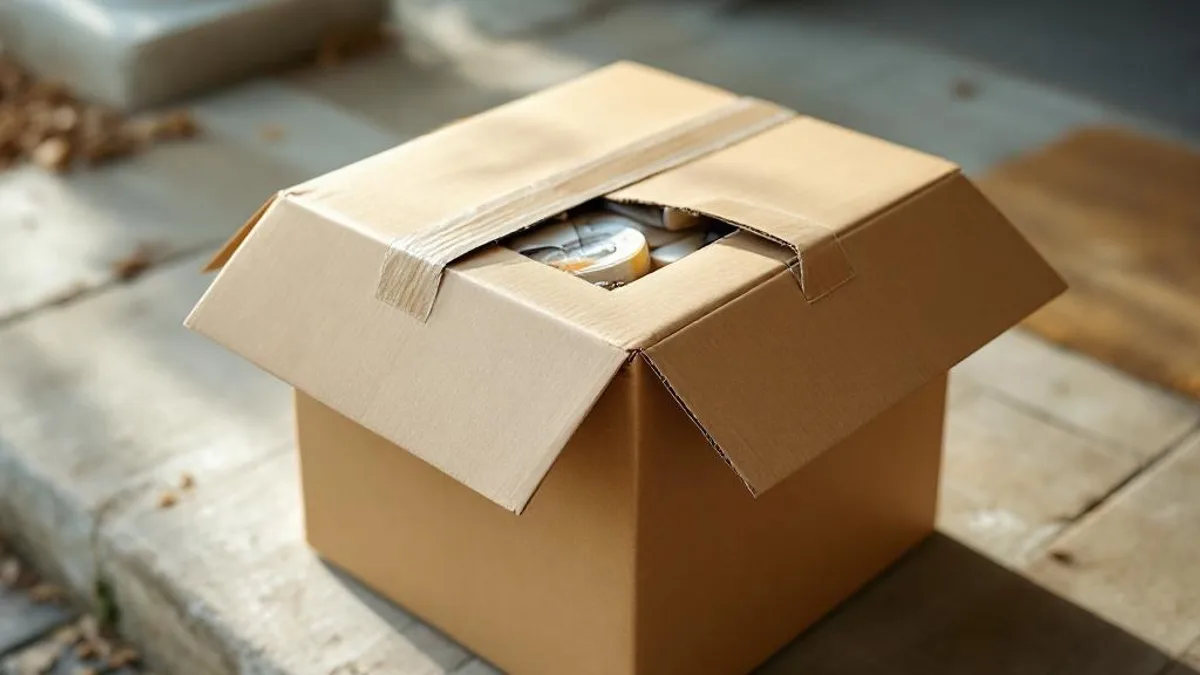
Pack fragile items for shipping by double-boxing with at least 2 inches of cushioning on all six sides, immobilizing the item so it cannot shift, and labeling the outer box "Fragile" on all faces. Horizon Pack and Ship in Elizabethtown KY and Radcliff KY does this professionally for $15 to $45 per item, and our packing is covered by carrier declared-value insurance.
What do I need to pack fragile items at home?
You need six materials to pack a single fragile item to UPS/FedEx/USPS standards.
- An inner box sized about 1 inch larger than the item on every side
- An outer box at least 2 inches larger than the inner box on every side
- Bubble wrap or foam sheets, minimum 3/16 inch bubble for hard items, 5/16 inch for glass and ceramics
- Packing peanuts, air pillows, or crumpled paper to fill the void space between inner and outer box
- Packing tape, 2 inch minimum width, reinforced (not Scotch tape, not duct tape)
- Fragile labels for all six faces of the outer box
The most common mistake is skipping the outer box and double-boxing. UPS's official guidance for fragile shipments requires double-boxing for items with a declared value over $100. Single-box packs lose insurance claims at a much higher rate.
How do I pack fragile items step-by-step?
The packing method below is what we use at the counter in Elizabethtown and Radcliff for every fragile item. It takes about 10 to 15 minutes per item.
Step 1: Inspect the item for existing damage
Photograph the item from at least three angles before you pack. If the item arrives damaged and you file a claim, the carrier will ask for proof of pre-shipment condition. Most claims fail because the shipper has no photos.
Step 2: Wrap the item in bubble wrap until you cannot feel hard edges
Use bubble wrap with the bubbles facing the item. Wrap a minimum of 3 layers for solid items (ceramics, glass, electronics). Wrap 5 layers for very fragile items (crystal, antique china, picture frames with glass). The test: press firmly with your hand and confirm you cannot feel any hard surface through the wrap.
Step 3: Tape the bubble wrap closed (do not let it unwind)
Use packing tape to secure the bubble wrap. A loose bubble wrap layer migrates in transit and the item ends up in direct contact with the box. This is the single most common failure pattern we see when customers bring in items they packed themselves that arrived broken.
Step 4: Place the wrapped item in an inner box with cushioning on every side
The inner box should be tight enough that the wrapped item cannot move when you gently shake the box. If you hear or feel any movement, add more cushioning. The "shake test" is the single highest-signal quality check.
Step 5: Place the inner box inside the outer box with 2 inches of cushioning all around
Fill the void between inner and outer boxes with packing peanuts, air pillows, or crumpled kraft paper. The 2-inch minimum applies to all six sides, top, bottom, and four walls. This is where most do-it-yourself packs cut corners.
Step 6: Seal the outer box with reinforced packing tape using the H-tape method
The H-tape method runs tape down the center seam of the box, then perpendicular tape across both ends of that center seam, forming an H pattern. This holds the box closed even if one tape strip fails. FedEx's official packing guide walks through the same method.
Step 7: Label all six faces of the outer box with Fragile stickers
UPS and FedEx use computer vision and human sorters who see boxes from random angles. A single Fragile label on one face is often missed. Six faces is overkill and that is the point.
Step 8: Add a "This Side Up" arrow if orientation matters
Glass picture frames, liquid containers, and certain electronics need orientation labels. Carriers do not guarantee orientation but the label increases the odds.
What do the major carriers actually require for fragile shipment claims?
Carrier claim approval rates vary significantly based on whether your packing meets each carrier's published specifications. The three major US carriers all publish formal packing requirements you can reference before filing.
UPS. Per UPS's official guide to fragile shipments, the carrier requires double-boxing for items declared above $100, minimum 2 inches of cushioning between inner and outer boxes, and the use of new (not recycled) corrugated boxes for items over 10 pounds. Claims filed without meeting these specs are routinely denied even when the item arrives broken.
FedEx. The FedEx official packaging guide documents the H-tape sealing method, minimum cushioning thickness per shipment type, and the specific declared-value insurance tiers. FedEx requires similar specs to UPS plus an additional requirement: the inner box must be sized to limit item movement to less than 1 inch when shaken.
USPS. Per USPS packing guidelines, the carrier handles fragile items differently, there is no formal "Fragile" service tier and Fragile labels do not slow handling. USPS recommends double-boxing, minimum 3 inches of cushioning for high-value items, and signature confirmation for any claim over $100.
For Kentucky shippers specifically, the proximity to UPS Worldport in Louisville (the largest UPS air sorting facility in North America) means UPS Ground from Elizabethtown KY moves through high-volume sorting equipment that produces more shock events than long-haul USPS. Pack to UPS-spec by default, your items see UPS sorting equipment regardless of the carrier label.
Source: Transport Intelligence parcel volume rankings tracks Worldport's 416,000 packages per hour sorting capacity, which Kentucky-origin packages frequently route through.
Quick-reference shock event sources during shipping that drive most fragile breakage:
- Conveyor drops at sorting facilities (12-36 inch fall heights, multiple events per package)
- Truck loading and unloading impacts (uneven distribution on pallets)
- Last-mile delivery vehicle vibration (cumulative over 50+ mile routes)
- Customer-end handling (packages thrown from delivery trucks, dropped at doors)
The International Safe Transit Association publishes formal testing standards (ISTA 1A, 3A, 6-FedEx, 6-UPS) that simulate these shock events. Packaging tested to ISTA standards survives commercial shipping reliably; packaging that has never been ISTA-tested often fails on the first long-haul shipment. The professional packers at Horizon Pack and Ship follow ISTA 3A specifications by default for any item with declared value above $250, which is why our packed shipments are eligible for full declared-value insurance claims under FedEx's declared-value coverage and UPS's claim support.
What are the most common mistakes when packing fragile items?
- Using too small an outer box. Less than 2 inches of clearance on any side means the item is taking direct shock. Fix: size up.
- Reusing a soft cardboard box. Old grocery and produce boxes have lost their structural rigidity. Fix: use a new corrugated box, double-wall for items over 10 pounds.
- Substituting newspaper for packing peanuts. Newspaper compresses in transit and loses cushioning. Fix: use packing peanuts, air pillows, or unprinted kraft paper.
- Skipping the inner-box layer for items over $100 declared value. Single-box packs are not eligible for full carrier declared-value claims. Fix: always double-box high-value items.
- Using Scotch tape or duct tape to seal the box. Scotch tape tears in shipping. Duct tape fails in heat. Fix: 2-inch reinforced packing tape only.
- Not photographing the item before packing. Insurance claims fail without proof of pre-shipment condition. Fix: photograph from 3+ angles before wrapping.
- Forgetting to add declared value at the carrier counter. Standard carrier liability is $100. Items above that need declared-value insurance, which costs about $1 per $100 of declared value.
When should I hire a professional packer instead of doing it myself?
Three signals tell you to bring the item to a professional packing counter instead of packing it yourself.
The item is worth more than $250. Carrier declared-value insurance only pays out on packs that meet packing specifications. If you pack the item yourself and the carrier rejects the claim, you eat the loss. Professionally packed and shipped items from Horizon Pack and Ship are covered under our packing because we follow carrier specifications by default.
The item is irreplaceable (antiques, family heirlooms, one-of-a-kind art). Even with insurance you cannot replace a grandfather's pocket watch. Pay for professional packing every time on irreplaceable items.
You are shipping multiple fragile items in one package. Bundling fragile items together correctly requires individual isolation, dividers, and orientation planning that is hard to get right on a kitchen table. We do this routinely at our counter in both Elizabethtown and Radcliff.
Our packing service runs $15 to $45 per item depending on size and fragility class. Walk-in, no appointment. Bring the item, we provide the box, materials, packing, and ship it the same day from either our 207 Towne Dr Elizabethtown location or 734 Knox Blvd Radcliff location.
What other questions do Kentucky shippers ask about fragile packing?
Five additional questions answered in the structured FAQ section above: materials list, cushioning thickness, whether Fragile labels actually work, peanuts versus bubble wrap, and professional packing costs in Elizabethtown KY.
About the author

Justin Fernandez owns Horizon Pack and Ship, with retail shipping locations in Radcliff and Elizabethtown. HPNS is an authorized UPS, FedEx, DHL Shipping Outlet and a USPS Approved Postal Provider serving home-based businesses, government contract winners, military families, and Hardin County residents.
Read full bio →